
Bottle rinsing machines hub
Return to the full machine range and compare alternative rinser styles.
Explore route →Bottle washers for projects where containers need more than a simple air rinse before filling or reuse.
The brief may involve internal bottle washing, external bottle cleaning, bottle reuse, recycled bottle preparation or washing before a hygienic filling process. The correct machine depends on the bottle material, contamination type, temperature limits, water quality, bottle orientation and whether the bottle must be dry after washing.
A washer can be a stand-alone preparation machine or part of a larger filling, capping and labelling line. The project should consider how bottles are loaded, transferred, drained and inspected before product is filled.
Use these checks to compare this page against the wider bottle rinser range.
| Project condition | Why it matters | What to confirm |
|---|---|---|
| Contamination level | Washing scope depends on whether bottles have dust, residue, packaging debris or heavier contamination. | Container condition and cleanliness target |
| Nozzle coverage | Internal and external surfaces require different spray positions. | Bottle opening, spray angle, pressure and dwell time |
| Line connection | Washed bottles must remain clean and stable after discharge. | Filler entry, inspection point, drying and accumulation |
Final configuration should always be confirmed against your bottle sample, line layout and site utilities.
| Example machine family | Automatic 12-nozzle bottle washer with conveyor |
|---|---|
| Example listed model | LU-WB12 |
| Example output | About 2,800 bottles/hour, format dependent |
| Example power | 0.75 kW listed on reference specification |
Return to the full machine range and compare alternative rinser styles.
Explore route →Use the buying guide to prepare a stronger shortlist and specification brief.
Explore route →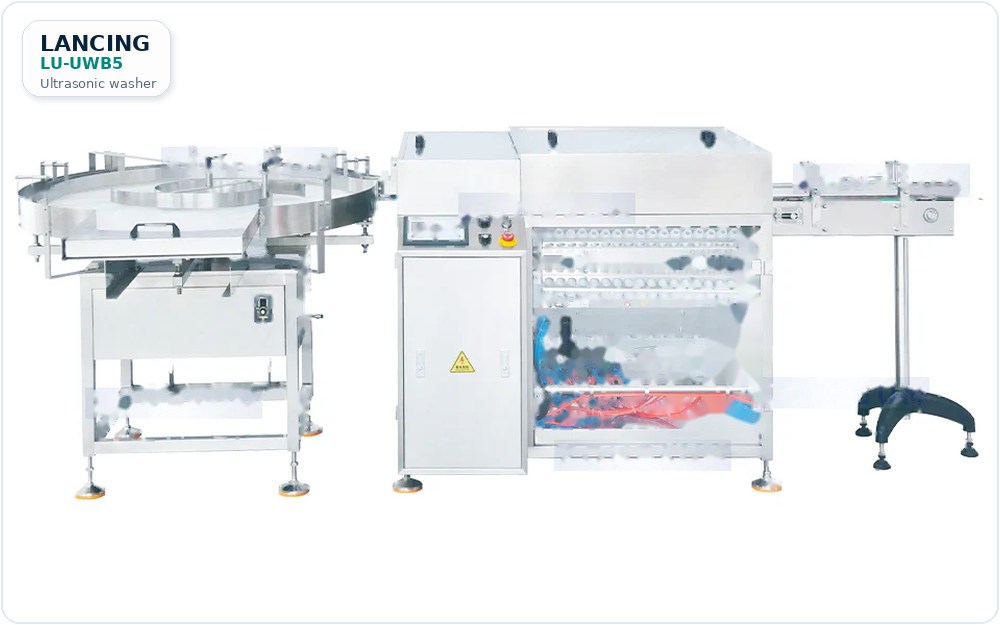 Service
Plan conveyors, transfer points, utilities and installation before ordering.
Explore route →In practice the terms overlap, but bottle washing normally implies a stronger wet cleaning process while bottle rinsing can include air, water or rinse-dry preparation.
Some systems are designed for internal and external cleaning. The required surfaces should be specified at enquiry stage.
Typical checks include electrical supply, water supply, drainage, compressed air, machine footprint and access for cleaning or maintenance.
This page can support buyers comparing water rinsing, bottle washing and rinse-dry handling, but it should not duplicate the full bottle-washing domain. For new empty bottles before filling, the key checks are particulate removal, internal rinse contact, residual moisture and line integration. For returned bottles, visible soils, label removal or heavy external cleaning, Bottle Washers UK is the more precise destination.
Within this site, washing content should therefore focus on the boundary between a rinse stage and a rinse-dry stage. Useful specification inputs include bottle material, soil type, water services, wastewater route, drying expectation, nozzle access and what the downstream filler or labeller can tolerate.