
Bottle rinsing machines hub
Return to the full machine range and compare alternative rinser styles.
Explore route →Combined bottle washing and drying routes for lines where residual water must be controlled before the next production stage.
The process may include internal water flushing, external washing, draining dwell time and clean-air drying. This can be important where residual water would dilute product, interfere with filling, affect label adhesion or create quality problems around the closure.
The key engineering challenge is balance. The washer and dryer must provide enough dwell time and air capacity without creating a footprint that overwhelms the production area or slows the line.
Use these checks to compare this page against the wider bottle rinser range.
| Project condition | Why it matters | What to confirm |
|---|---|---|
| Dryness target | Drying requirement determines the air system and dwell time. | Acceptable residual moisture and downstream tolerance |
| Air supply | Drying can demand substantial clean-air capacity. | Air pressure, flow, filtration and noise expectations |
| Footprint | Rinse plus dry stages can be longer than rinse-only equipment. | Available space, access and conveyor route |
Return to the full machine range and compare alternative rinser styles.
Explore route →Use the buying guide to prepare a stronger shortlist and specification brief.
Explore route →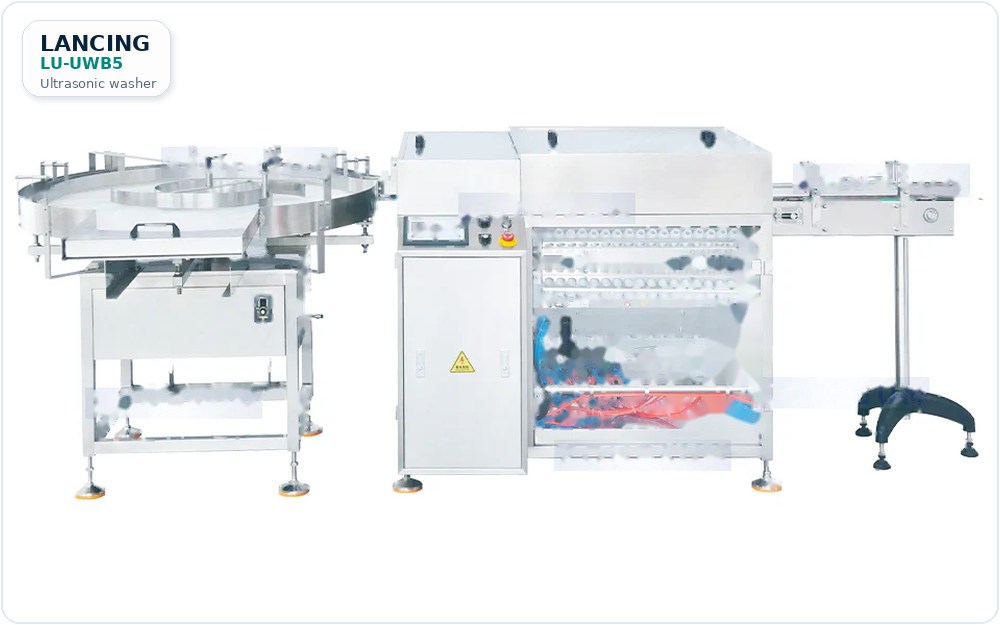 Service
Plan conveyors, transfer points, utilities and installation before ordering.
Explore route →Choose rinse-dry when bottles require wet cleaning but need to be dry before filling, labelling or closure application.
Often yes, but the available space, conveyor route, air capacity and required dryness level must be checked.
No. Draining dwell time and air drying usually work together; the final setup depends on bottle shape and line speed.
A bottle can look acceptable at the rinser but still create problems at filling, coding or labelling if moisture remains in the wrong area. The drying requirement should therefore be defined against the downstream process, not just as a general statement that the bottle must be dry.
| Check | How to validate it | Why it affects specification |
|---|---|---|
| Drain time | Check how the bottle drains in its real orientation and at the planned line speed. | Some bottle shapes retain water around shoulders, bases or neck features. |
| Drying air | Confirm whether clean air, blow-off position or extra dwell is required. | Controls residual moisture before filling, labelling or coding. |
| Inspection point | Inspect immediately before the downstream operation. | Validates the condition that actually affects production quality. |
| Utilities and noise | Review compressed air, extraction, guarding and operator environment. | Avoids underestimating the installation requirement. |
Wet bottles before labelling · Validation checks · Sample testing support