
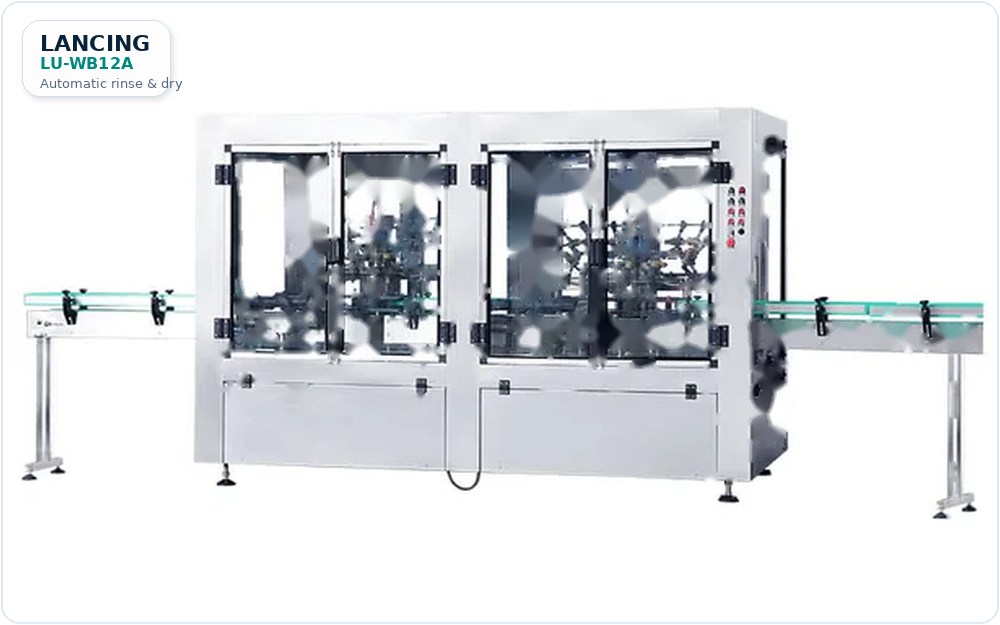
 Automatic
Automatic bottle rinsers
Inline machines for higher-output bottle preparation before filling, capping or labelling.
Explore route →Specify automatic, semi-automatic, rotary, air-rinse and water-wash bottle rinsing machinery for glass, PET, cosmetic, beverage, chemical and pharmaceutical-style packaging lines.
Most successful projects start by matching the rinser style to the container, contamination risk, available utilities and the equipment immediately downstream.
Automatic
Inline machines for higher-output bottle preparation before filling, capping or labelling.
Explore route →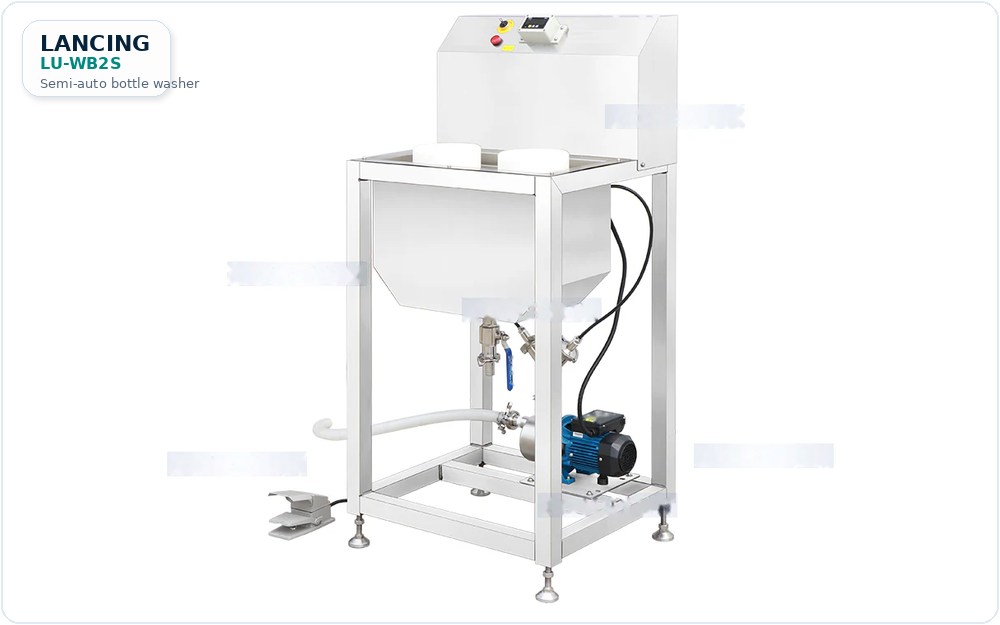 Semi-auto
Operator-fed and compact routes for smaller batches, flexible formats and lower capital projects.
Explore route →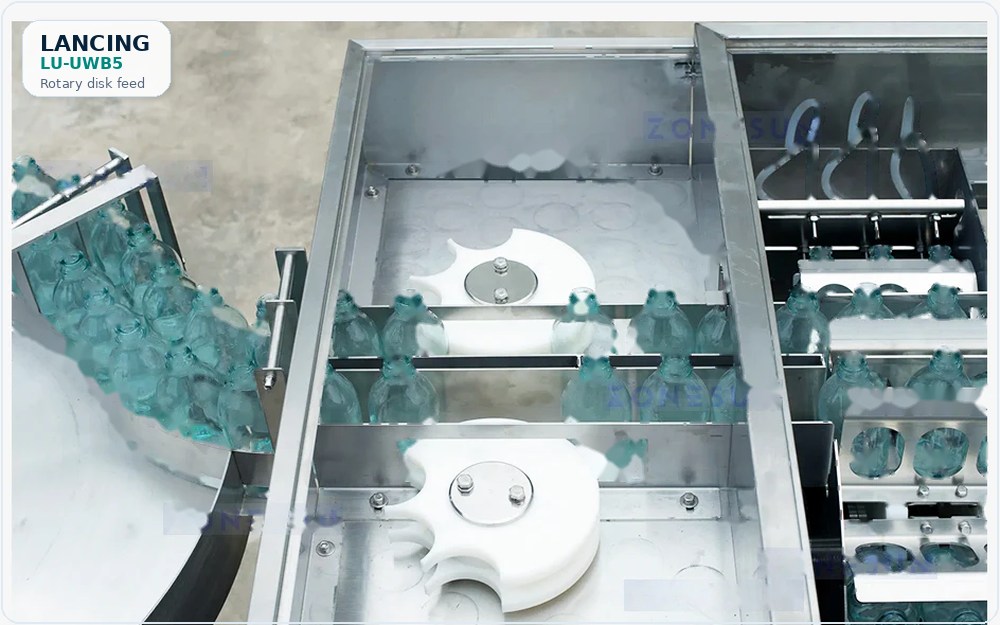 Rotary
Rotary indexing and multi-head rinsing routes for stable presentation and repeatable bottle handling.
Explore route →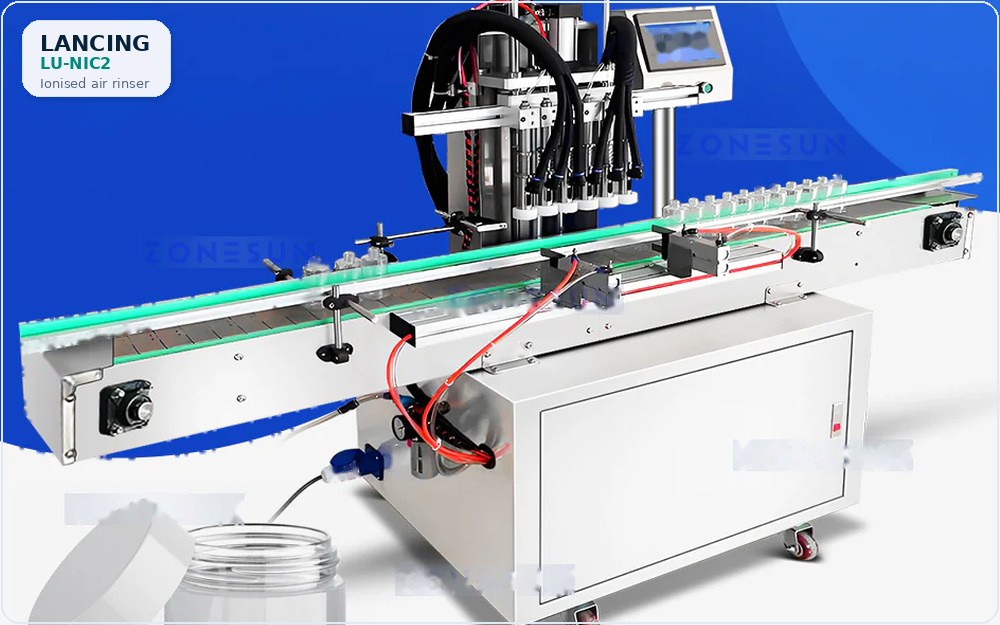 Air rinse
Waterless bottle cleaning for dust, light debris and dry container preparation before filling.
Explore route →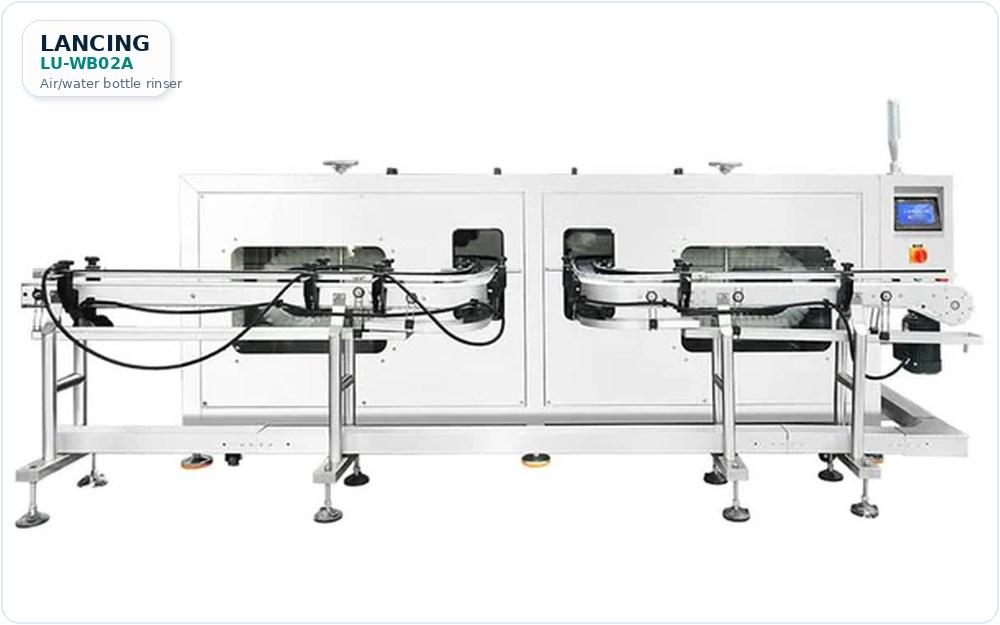 Water rinse
Internal or external bottle washing where water rinsing is required before production.
Explore route →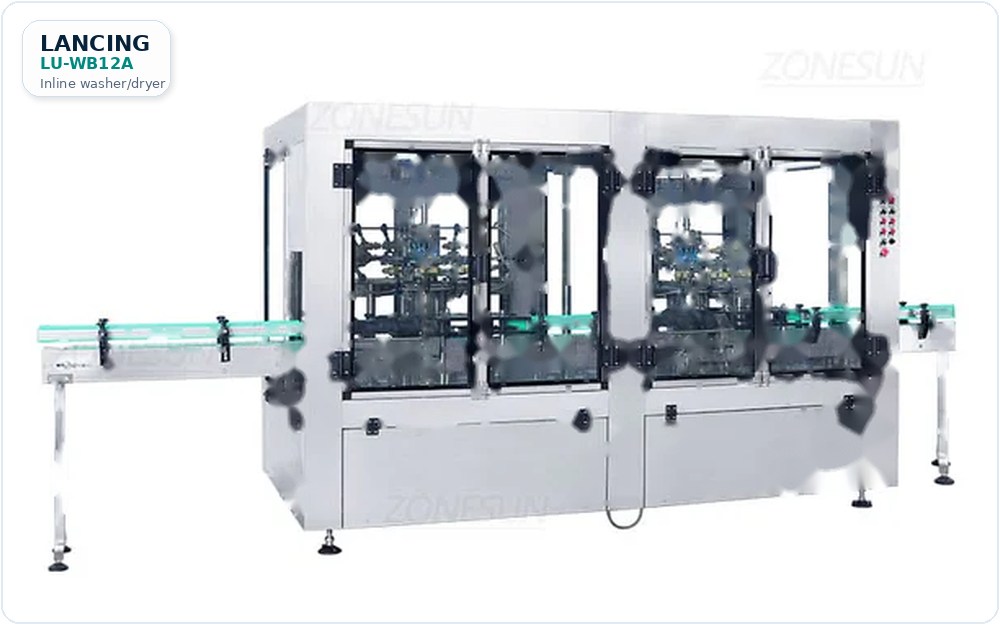 Rinse & dry
Combined washing, draining and clean-air drying for containers that must be dry before fill or label application.
Explore route →Bottle Rinsers UK is designed for buyers who already know the next production problem: bottles need to arrive at the filler clean, stable, correctly presented and ready for filling. The site separates the main routes — air rinsing, water rinsing, bottle washing, rotary washing and rinse-dry systems — so the enquiry can move quickly from general research to a practical shortlist.
Good bottle rinsing selection is not only about the washing head. The bottle material, neck opening, bottle stability, rinse medium, compressed-air quality, drain route, line speed and transfer into the filler all affect whether the final installation runs smoothly. That is why the page structure supports both SEO and project planning: machine pages cover the equipment family, application pages cover the bottle or industry context, and guides help buyers prepare better quote information.
Use this comparison as a starting point. The final machine should be confirmed against real bottle samples, line speed and site utilities.
| Rinser type | Best fit | Key checks |
|---|---|---|
| Automatic inline bottle rinser | Higher-output lines with conveyor transfer | Bottle stability, line speed, water/air services, guarding and downstream buffering |
| Semi-automatic bottle rinser | Start-ups, short runs and frequent format changes | Operator loading method, changeover time, bottle handling and achievable batch speed |
| Rotary bottle washer | Controlled indexing and repeatable rinse positions | Head count, bottle diameter range, loading access, cleaning method and drainage |
| Air rinser | Dry bottles where dust or light debris must be removed | Compressed-air quality, ionised air requirement, extraction and bottle inversion |
| Water wash and dry system | Containers that require a wet rinse and dry internal finish | Water quality, drying air, dwell time, drain design and hygiene expectations |
These application routes are included to support searches where buyers describe the bottle, product category or line problem rather than the machine name.
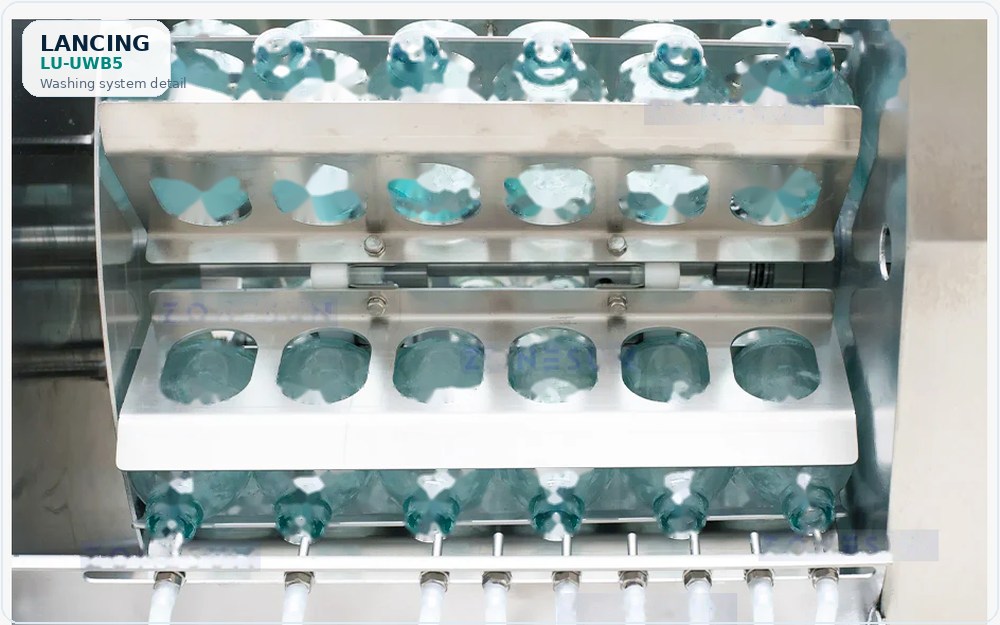 Application
Bottle rinsing and washing routes for glass bottles used in drinks, oils, spirits, sauces and premium products.
Explore route →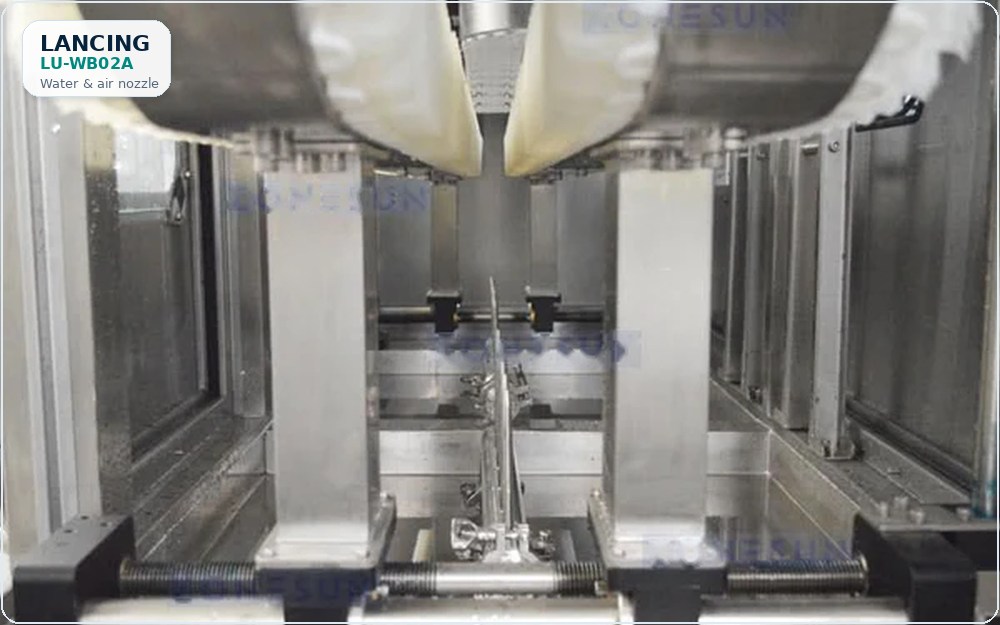 Application
Bottle preparation for PET, HDPE and lightweight plastic bottles where stability and transfer are critical.
Explore route →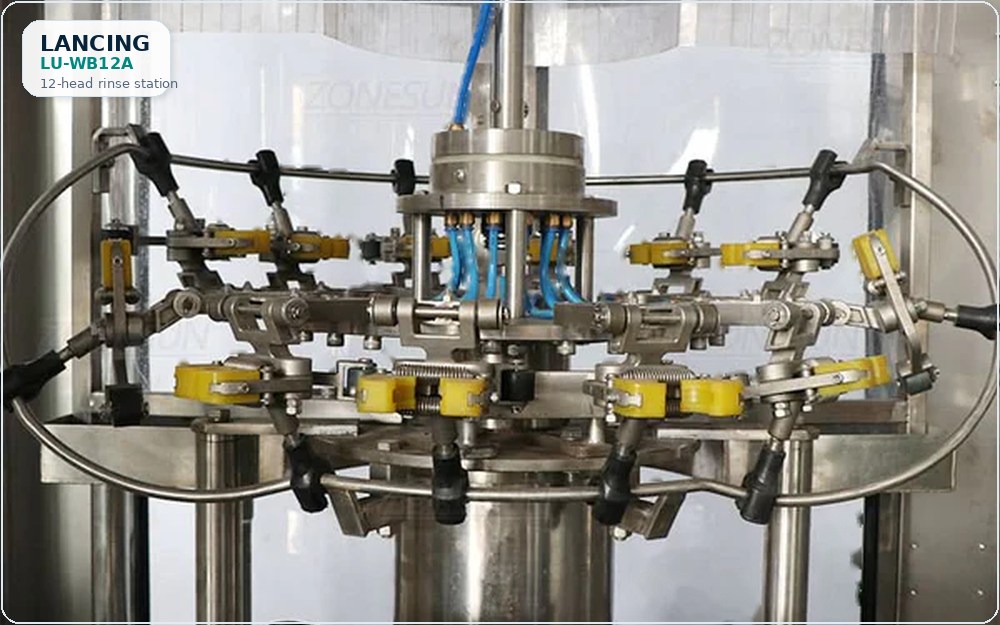 Industry
Bottle rinsing machinery for beverage, sauce, edible oil and food production lines.
Explore route →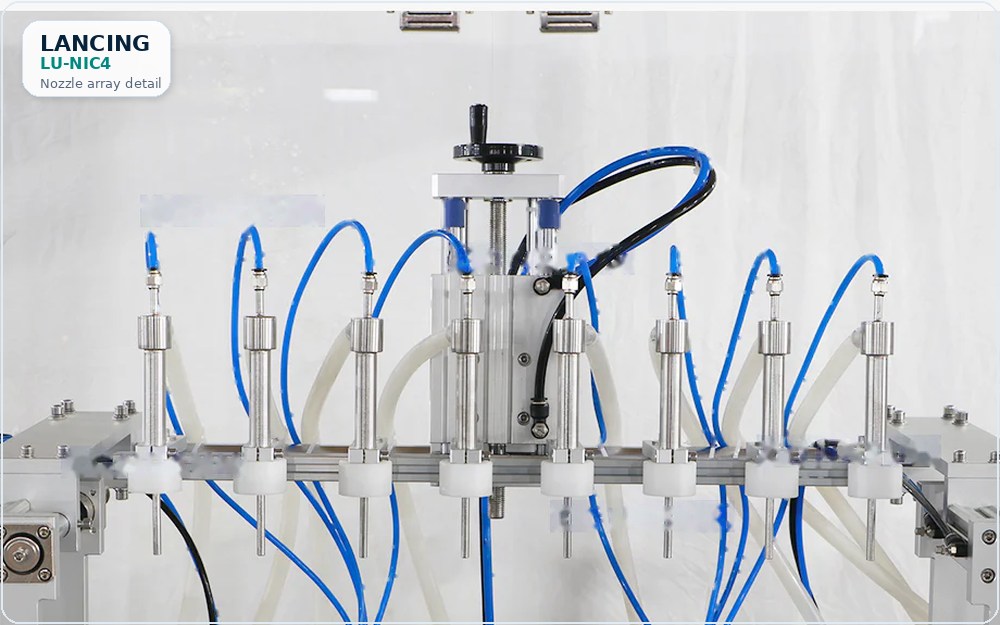 Industry
Container rinsing for shampoos, lotions, skincare, pump bottles and premium presentation-led packs.
Explore route →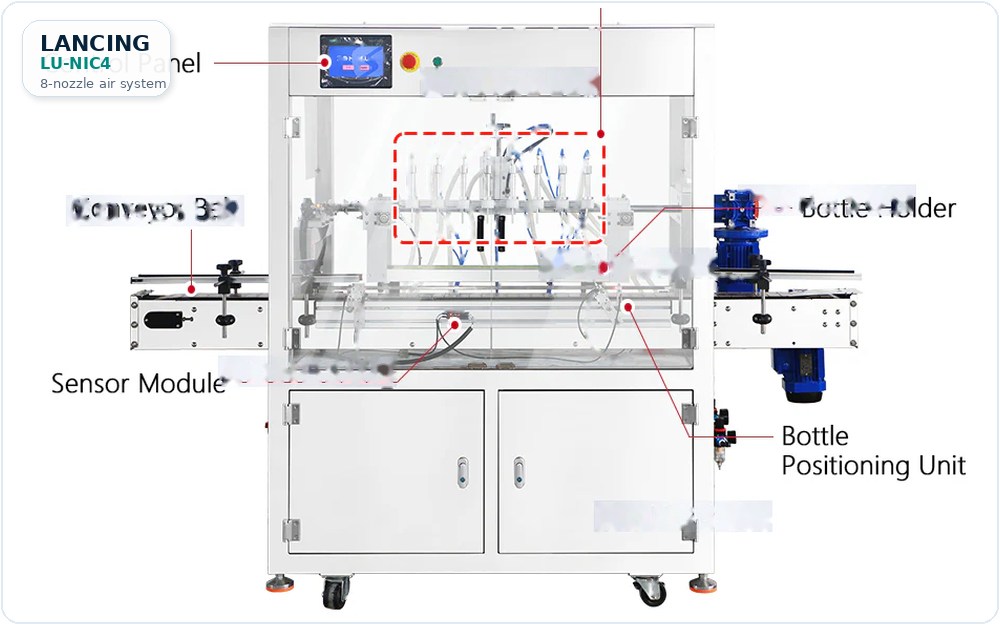 Industry
Bottle rinser routes for detergents, cleaners, automotive fluids and household liquids.
Explore route →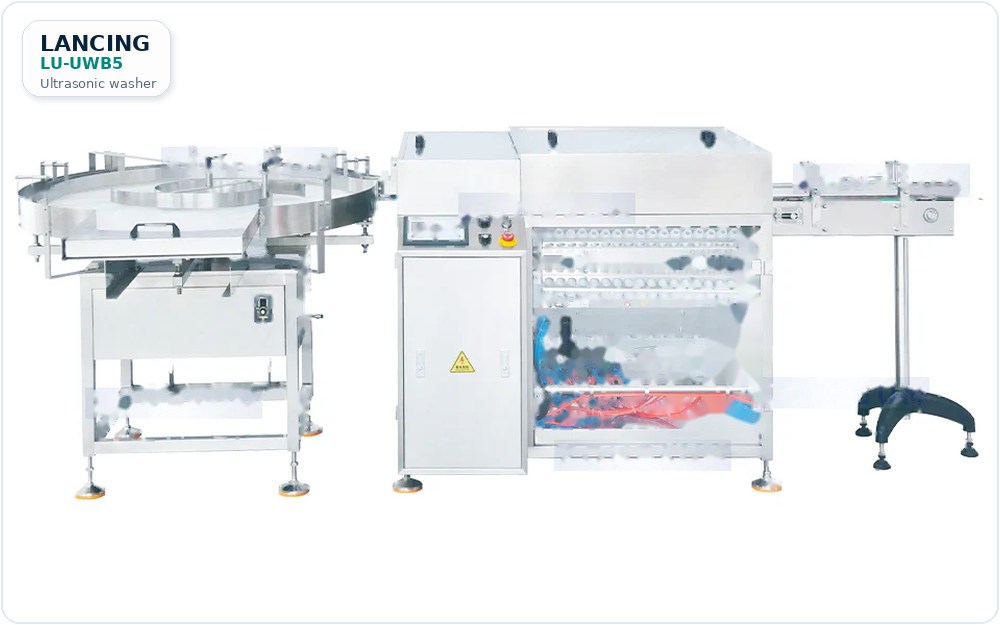 Service
Support for conveyor interfaces, utilities, handover, commissioning and line readiness.
Explore route →The guide section is built to catch long-tail searches and help real buyers prepare the information needed for a useful machinery quote.
A bottle rinser removes dust, debris, loose particles or rinse residues from containers before filling. The correct system depends on the bottle material, cleanliness requirement and whether the line needs air rinsing, water washing or drying.
Air rinsing is normally considered where the container must stay dry and the contamination is light. Water rinsing or bottle washing is considered where the container needs a wet wash, internal rinse or external clean before production.
Yes. A rinser can often be installed as an upstream machine before filling, provided the conveyor height, transfer points, speed, utilities and safety guarding are checked properly.
Bottle dimensions, material, neck finish, required rinse method, target speed, available utilities and the existing line layout are the most useful details for a realistic quote.
Often yes, but the practical range depends on bottle height, diameter, shape, neck opening, stability and the change parts or adjustments required between formats.
The site is built around UK specification, supply, installation and line integration support through Lancing Ltd.
Send the bottle details, rinse requirement and output target. We will help turn it into a practical shortlist.
For bottle rinsing projects, the strongest specification usually starts with the contamination risk rather than the machine name. Light dust in new empty bottles, visible loose particles, rinse-water residue, static attraction, residual moisture and bottle instability all point to different equipment choices. A dry air bottle rinser, an ionised-air route, a water bottle rinser or a rinse-and-dry system should be selected around the evidence from the actual bottle and the surrounding filling line.
Before quotation, Lancing should be given bottle samples or drawings, the required output, the upstream feed method, the downstream filler interface and the available utilities. This lets the shortlist cover nozzle access, inversion, water quality, air filtration, drainage and bottle handling without publishing unsupported assumptions. Where a project becomes a full wash, returnable-bottle or de-labelling project, use the dedicated Bottle Washers UK route instead of stretching this rinse-focused site into a different search intent.
| Check | How to validate it | Why it affects specification |
|---|---|---|
| Particulate removal | Compare sample bottles before and after the proposed rinse under agreed inspection conditions. | Confirms whether air, ionised air, water rinse or a combined route is appropriate. |
| Filtered or ionised air | Confirm the air supply quality, nozzle position, extraction need and whether static attraction is part of the problem. | Prevents a dry rinser being specified for contamination that needs water or longer contact time. |
| Water quality and drainage | Check supply water, rinse-water contact, drain route and whether the next process can tolerate residual moisture. | Separates water-rinse projects from rinse-and-dry or full bottle-washing projects. |
| Line integration | Confirm conveyor height, transfer points, guarding envelope, buffer space and filler speed. | Avoids selecting a rinser that works as a machine but fails as part of the line. |
Use representative bottle samples and inspect the container before and after rinsing under agreed lighting or magnification. For higher-risk projects, define the acceptance check before the trial rather than relying on a general description of “clean”.
The most useful details are available water, drainage, compressed-air quality, electrical supply, conveyor height, footprint and the output target. These decide whether air rinsing, water rinsing or rinse-dry handling is realistic.
This site should own rinse, air rinse and pre-fill container preparation. If the project is centred on heavy washing, returnable bottles, label removal or full bottle-washing duty, the specialist Bottle Washers UK route is the better contextual reference.