
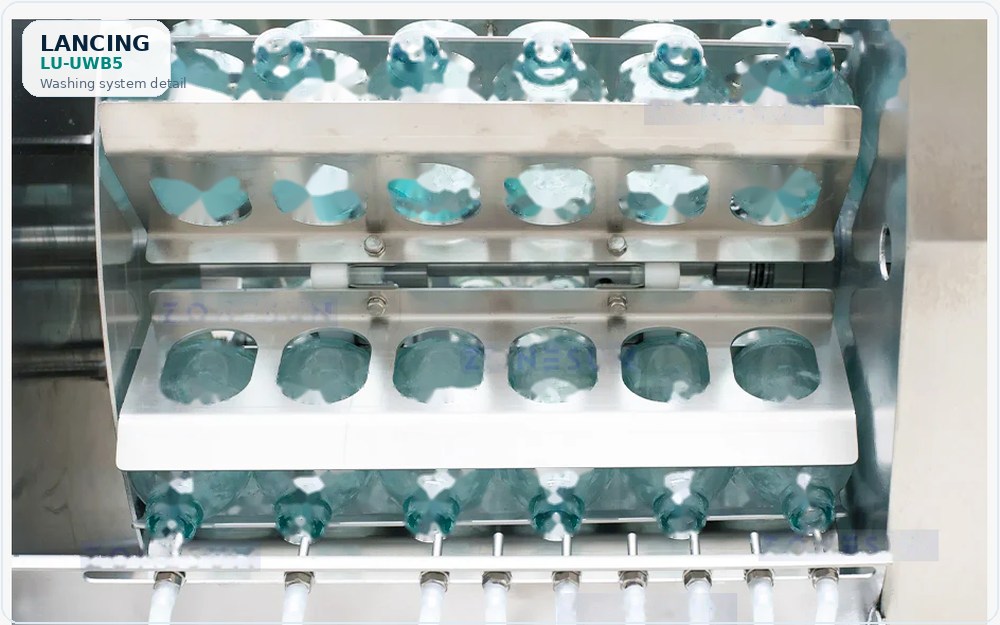
 Application
Glass bottle rinsers
For drinks, oils, sauces and premium glass packaging.
Explore route →Container rinsing and washing machinery for drinks, sauces, edible oils, condiments and food production lines.
The correct system depends on the container, product risk, line speed and whether bottles are new, stored, reused or handled in open production areas. Some lines only need air rinsing before filling. Others require water washing, draining or drying before product contact.
For beverage and food products, the rinser must be planned with the filler and capper rather than selected in isolation.
Application
For drinks, oils, sauces and premium glass packaging.
Explore route →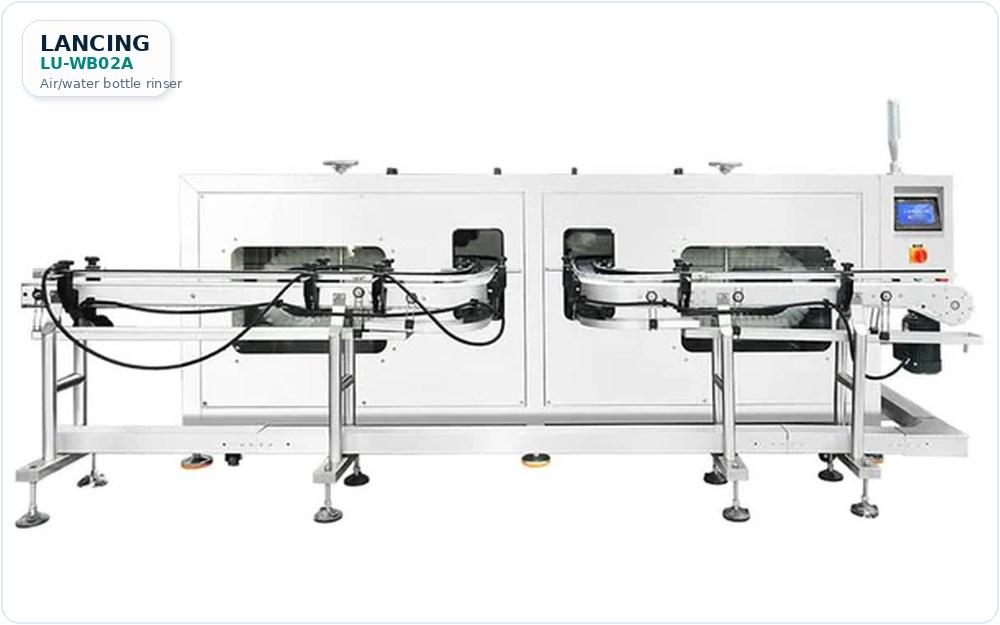 Route
Route
For internal wet rinsing and bottle washing before filling.
Explore route → Guide
Guide
Plan the rinser, filler, capper and conveyors together.
Explore route →For application-led projects, the correct rinser depends on how the bottle arrives, how it is filled and how quickly it must move to capping, labelling or packing.
| Rinser type | Best fit | Key checks |
|---|---|---|
| Automatic inline bottle rinser | Higher-output lines with conveyor transfer | Bottle stability, line speed, water/air services, guarding and downstream buffering |
| Semi-automatic bottle rinser | Start-ups, short runs and frequent format changes | Operator loading method, changeover time, bottle handling and achievable batch speed |
| Rotary bottle washer | Controlled indexing and repeatable rinse positions | Head count, bottle diameter range, loading access, cleaning method and drainage |
| Air rinser | Dry bottles where dust or light debris must be removed | Compressed-air quality, ionised air requirement, extraction and bottle inversion |
| Water wash and dry system | Containers that require a wet rinse and dry internal finish | Water quality, drying air, dwell time, drain design and hygiene expectations |
Many do, especially where bottles may contain dust or debris before filling. The required level of cleaning depends on the product, container and production environment.
Glass or PET drinks bottles may use air, water, rotary or inline automatic systems depending on cleanliness target and output.
Yes. The rinser should be sized around the filler and wider line so it does not create a bottleneck.
Food and beverage projects often involve glass or PET bottles entering a filling line where the preparation stage must be consistent and easy to clean. Define the rinse method, water quality expectation, drain path and line integration before comparing automatic, rotary or semi-automatic options.
| Check | How to validate it | Why it affects specification |
|---|---|---|
| Water quality | Agree site expectations and any treatment requirement before quotation. | Avoids unsupported assumptions about rinse water. |
| Particulate risk | Inspect sample bottles before and after rinsing. | Confirms whether air or water is appropriate. |
| Line speed | Compare rinser speed with filler speed and buffer space. | Prevents the preparation stage becoming the bottleneck. |
Plan validation checks · Arrange sample testing · Send project details