
 Route
Route
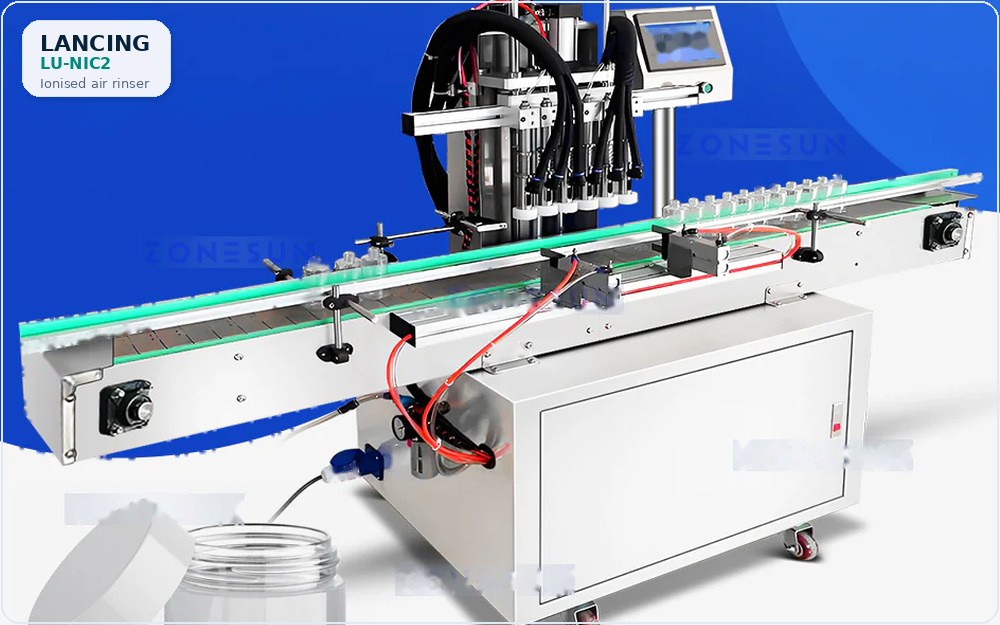
Air rinsing machines
Dry preparation for dust and light debris removal.
Explore route →Bottle preparation for cosmetic, skincare, lotion, shampoo and personal-care containers before filling and closure application.
Bottles may be coloured, shaped, lightweight, premium-finish or paired with pumps and trigger closures. The rinser must avoid scuffing, tipping or leaving water that could affect labels, sleeves or product appearance.
Air rinsing, controlled water rinsing and rinse-dry systems can all be relevant depending on the bottle condition and downstream label or closure process.
Route
Dry preparation for dust and light debris removal.
Explore route →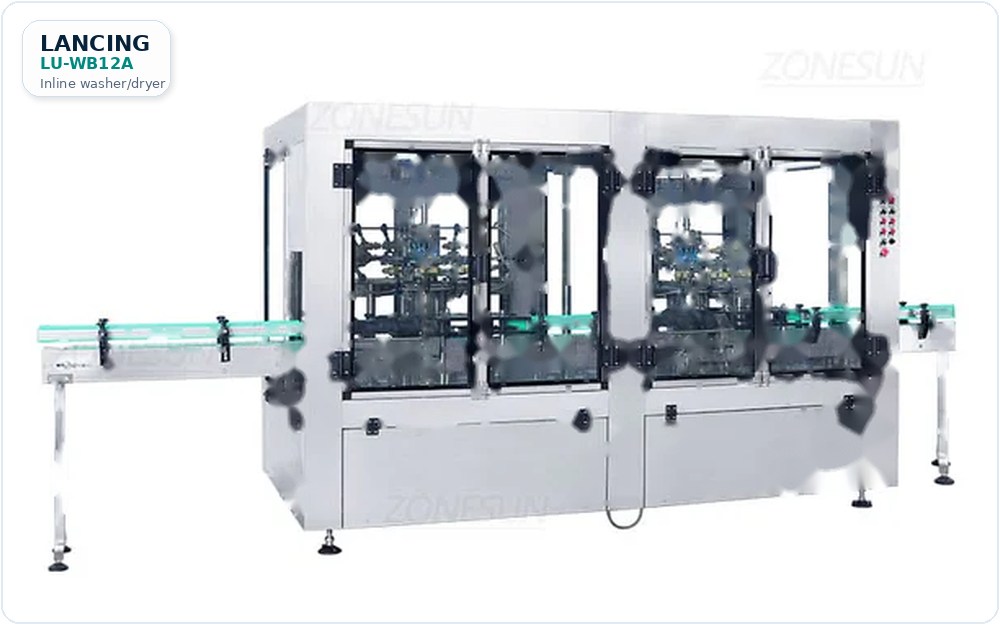 Route
Route
For wet-rinse projects where bottles must be dry before labels or filling.
Explore route →Send the right bottle, closure and label details for review.
Explore route →For application-led projects, the correct rinser depends on how the bottle arrives, how it is filled and how quickly it must move to capping, labelling or packing.
| Rinser type | Best fit | Key checks |
|---|---|---|
| Automatic inline bottle rinser | Higher-output lines with conveyor transfer | Bottle stability, line speed, water/air services, guarding and downstream buffering |
| Semi-automatic bottle rinser | Start-ups, short runs and frequent format changes | Operator loading method, changeover time, bottle handling and achievable batch speed |
| Rotary bottle washer | Controlled indexing and repeatable rinse positions | Head count, bottle diameter range, loading access, cleaning method and drainage |
| Air rinser | Dry bottles where dust or light debris must be removed | Compressed-air quality, ionised air requirement, extraction and bottle inversion |
| Water wash and dry system | Containers that require a wet rinse and dry internal finish | Water quality, drying air, dwell time, drain design and hygiene expectations |
Yes, where dry dust removal is sufficient and the bottle can be handled safely.
Residual water can affect label adhesion, appearance or product quality, so a rinse-dry route may be required after wet washing.
Possibly, but shaped containers may need format parts, guide adjustments or sample testing.
Cosmetic and personal-care bottles can be presentation-led, lightweight or fitted with pump and trigger closures later in the line. Rinsing should be planned around visible debris, bottle stability, static, residual moisture and whether water marks could affect labelling or shelf appearance.
| Check | How to validate it | Why it affects specification |
|---|---|---|
| Visual inspection | Agree the lighting and position used to inspect the bottle. | Supports presentation-led acceptance checks. |
| Static and dust | Test filtered or ionised air on the real container. | Useful where particles cling to plastic surfaces. |
| Downstream label area | Check whether water or condensation reaches label panels. | Prevents later labelling defects. |
Plan validation checks · Arrange sample testing · Send project details