
Bottle rinsing machines hub
Return to the full machine range and compare alternative rinser styles.
Explore route →Inline bottle rinsing machinery for higher-output container preparation before filling, capping and labelling.
These machines normally rely on stable conveyor handling, repeatable bottle positioning and confirmed services such as compressed air, water, drainage or electrical supply. They suit projects where manual rinsing creates a bottleneck or where the production brief requires a more controlled pre-fill process.
The right automatic rinser may use air, water or a combined rinse-dry process. The choice depends on the cleanliness requirement, bottle material, neck opening, speed and whether containers must remain dry before product enters the bottle.
Use these checks to compare this page against the wider bottle rinser range.
| Project condition | Why it matters | What to confirm |
|---|---|---|
| Higher output | Automatic handling reduces manual intervention and helps support consistent line speed. | Target bottles per minute, upstream feed and downstream filler speed |
| Bottle stability | Tall, light or flexible bottles may need extra handling control. | Base diameter, bottle height, rail settings and transfer points |
| Rinse method | Air, water and dry-off systems have different utility and hygiene implications. | Compressed air quality, water supply, drainage and drying requirement |
Final configuration should always be confirmed against your bottle sample, line layout and site utilities.
| Example route | Inline automatic bottle washer with conveyor |
|---|---|
| Example output | About 2,800 bottles/hour on a listed 12-nozzle washer route |
| Typical services to confirm | Power, water, drainage, compressed air and conveyor interface |
| Common bottle types | Glass, PET and shaped bottles subject to handling checks |
Return to the full machine range and compare alternative rinser styles.
Explore route →Use the buying guide to prepare a stronger shortlist and specification brief.
Explore route →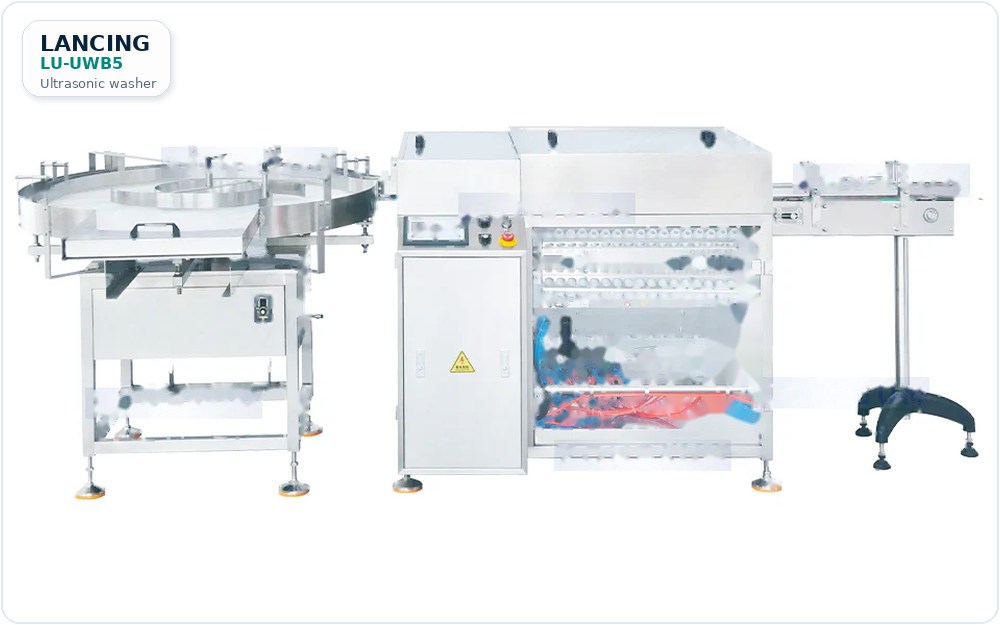 Service
Plan conveyors, transfer points, utilities and installation before ordering.
Explore route →Output depends on the bottle, rinse method, line layout and number of rinse positions. A sample and target bottles per minute are needed before confirming a realistic speed.
Often yes, but the conveyor height, controls interface, guarding, transfer distance and buffering need to be checked.
Choose air rinsing when bottles must remain dry and contamination is light. Choose water rinsing or rinse-dry when the process needs a wet wash or internal rinse before filling.
An automatic bottle rinser has to keep pace with the filler without creating unstable transfers, water carry-over, missed nozzles or difficult changeovers. The first engineering check is therefore the real line layout: infeed conveyor height, bottle spacing, guide-rail contact, transfer into the rinse area, draining or blow-off position and the downstream filler interface.
Where a 12-nozzle conveyor washer route is being considered, the machine still needs to be confirmed against the bottle sample, rinse contact time, nozzle access, utilities and any drying requirement. Do not rely on a headline output alone: shape, neck opening, lightweight PET behaviour and required cleanliness standard can all reduce the practical speed.
| Check | How to validate it | Why it affects specification |
|---|---|---|
| Output target | Compare the target bottles per minute with bottle stability, rinse dwell and downstream filler speed. | Ensures the quoted output is practical for the full line. |
| Nozzle alignment | Use bottle samples to confirm neck opening, presentation and repeatable nozzle position. | Prevents missed internal rinses and helps plan change parts. |
| Utilities | Confirm power, water, drainage, compressed air and any extraction or drying-air requirement. | Separates air, water and rinse-dry options before purchase. |
| Cleaning access | Check access to nozzles, guards, drain areas and product-contact-adjacent surfaces. | Supports maintenance and operator cleaning without redesigning the installation later. |
Most automatic bottle-rinsing routes are planned around controlled conveyor transfer or indexed bottle handling, so conveyor height, speed and bottle spacing need to be known.
Practical speed is controlled by bottle stability, rinse dwell, loading, downstream speed, utilities, drainage and changeover method rather than by the rinser head count alone.
It may be possible, but glass and lightweight PET handle differently. Samples must be checked for guides, nozzle alignment, inversion and transfer stability.
Nozzles, filters, drain areas, guards, belts, rails and change parts should be accessible enough for cleaning and routine checks.
Choose rinse-dry planning when the downstream filling, labelling, coding or presentation requirement cannot tolerate residual water.