
 Route
Route
Air rinsing machines
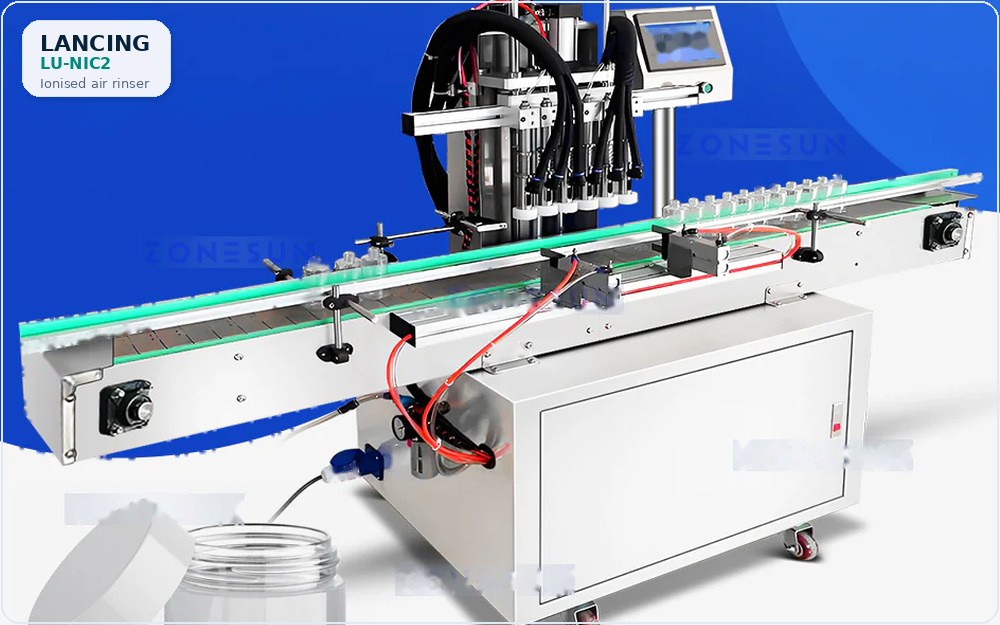
Dry dust removal route for PET and plastic bottles.
Explore route →Rinsing routes for lightweight PET, HDPE and plastic bottles where stability, static and transfer control matter.
PET and HDPE bottles can be light, flexible or static-prone. A bottle rinser must therefore control the container without crushing, tipping or introducing contamination risk. Air rinsing may be suitable for dry containers, while water washing or rinse-dry systems may be considered where a wet clean is required.
Bottle shape, base stability, neck opening and wall strength should be reviewed before the machine style is selected.
Route
Dry dust removal route for PET and plastic bottles.
Explore route →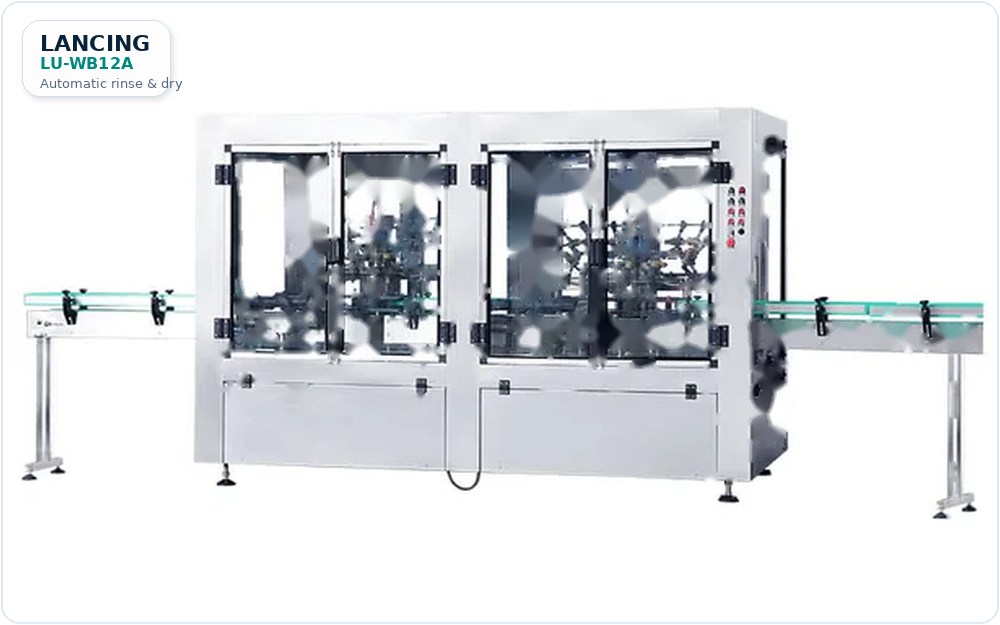 Route
Route
Inline rinsing for higher-output plastic bottle lines.
Explore route →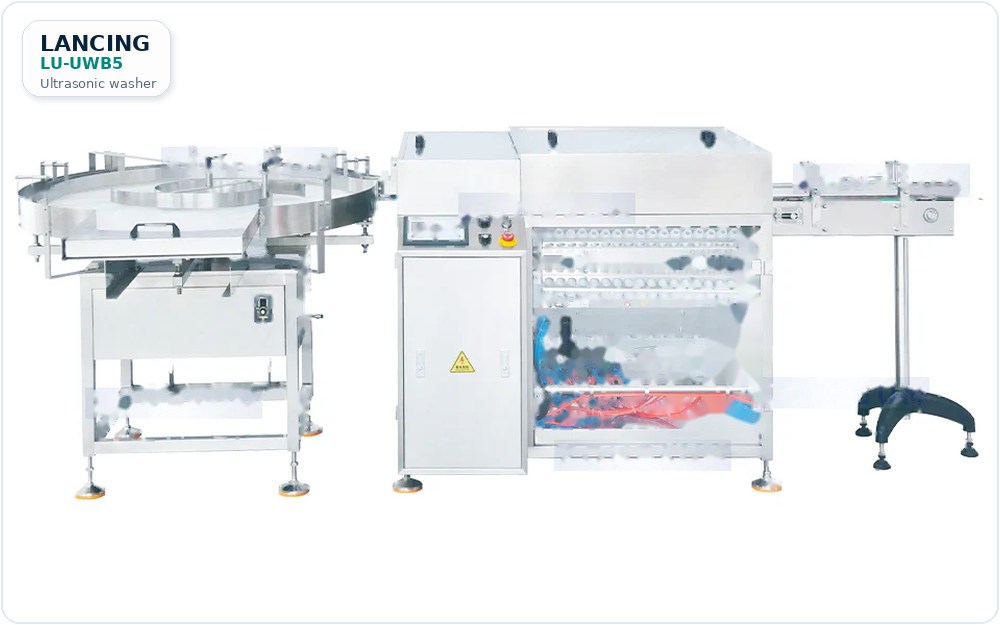 Service
Plan rail settings, transfer points and conveyors for lightweight bottles.
Explore route →For application-led projects, the correct rinser depends on how the bottle arrives, how it is filled and how quickly it must move to capping, labelling or packing.
| Rinser type | Best fit | Key checks |
|---|---|---|
| Automatic inline bottle rinser | Higher-output lines with conveyor transfer | Bottle stability, line speed, water/air services, guarding and downstream buffering |
| Semi-automatic bottle rinser | Start-ups, short runs and frequent format changes | Operator loading method, changeover time, bottle handling and achievable batch speed |
| Rotary bottle washer | Controlled indexing and repeatable rinse positions | Head count, bottle diameter range, loading access, cleaning method and drainage |
| Air rinser | Dry bottles where dust or light debris must be removed | Compressed-air quality, ionised air requirement, extraction and bottle inversion |
| Water wash and dry system | Containers that require a wet rinse and dry internal finish | Water quality, drying air, dwell time, drain design and hygiene expectations |
Often yes, but static, bottle stability and compressed-air quality must be checked.
Yes, subject to bottle strength, drainage, drying needs and product compatibility.
Lightweight bottles can tip, flex or behave inconsistently at transfer points, especially at higher line speeds.
PET, HDPE and lightweight plastic bottles can deform, tip or move differently from glass during air or water rinsing. The quote should confirm base stability, sidewall stiffness, neck opening, static attraction and transfer into the filler.
| Check | How to validate it | Why it affects specification |
|---|---|---|
| Bottle stability | Trial handling at the intended speed. | Prevents tipped bottles and missed rinse positions. |
| Static attraction | Test whether dust clings to the container. | May support an ionised-air route. |
| Moisture tolerance | Check whether residual water affects filling or labelling. | May require rinse-dry handling. |
Plan validation checks · Arrange sample testing · Send project details