
Bottle rinsing machines hub
Return to the full machine range and compare alternative rinser styles.
Explore route →Compact bottle rinsing and washing routes for smaller batches, changeover-heavy operations and lower-throughput packaging lines.
The operator may load bottles manually, transfer bottles to a rotary washer, or work with a compact rinsing machine that prepares containers in batches. This can suit start-ups, pilot runs, contract packers, distilleries, smaller beverage operations and manufacturers with frequent bottle changes.
Selection should focus on labour involvement, batch size, bottle handling, cleaning method and changeover time. A semi-automatic machine still needs good planning around drainage, air supply, bottle access and safe operator workflow.
Use these checks to compare this page against the wider bottle rinser range.
| Project condition | Why it matters | What to confirm |
|---|---|---|
| Batch size | Semi-automatic systems are most useful where production is not continuous high-speed running. | Bottles per batch, shift pattern and operator availability |
| Changeovers | Manual or tool-light adjustment can help multi-format production. | Bottle height range, diameter range and neck opening |
| Utilities | Compact machines still require safe, reliable services. | Water, air, drainage, electrical supply and cleaning procedure |
Final configuration should always be confirmed against your bottle sample, line layout and site utilities.
| Example route | Rotary small semi-automatic bottle washing machine |
|---|---|
| Example design note | Multi-head rotary bottle washing with adjustable bottle handling |
| Project fit | Small to medium-scale production and flexible formats |
| Utilities to confirm | Water usage, air supply, drainage and electrical supply |
Return to the full machine range and compare alternative rinser styles.
Explore route →Use the buying guide to prepare a stronger shortlist and specification brief.
Explore route →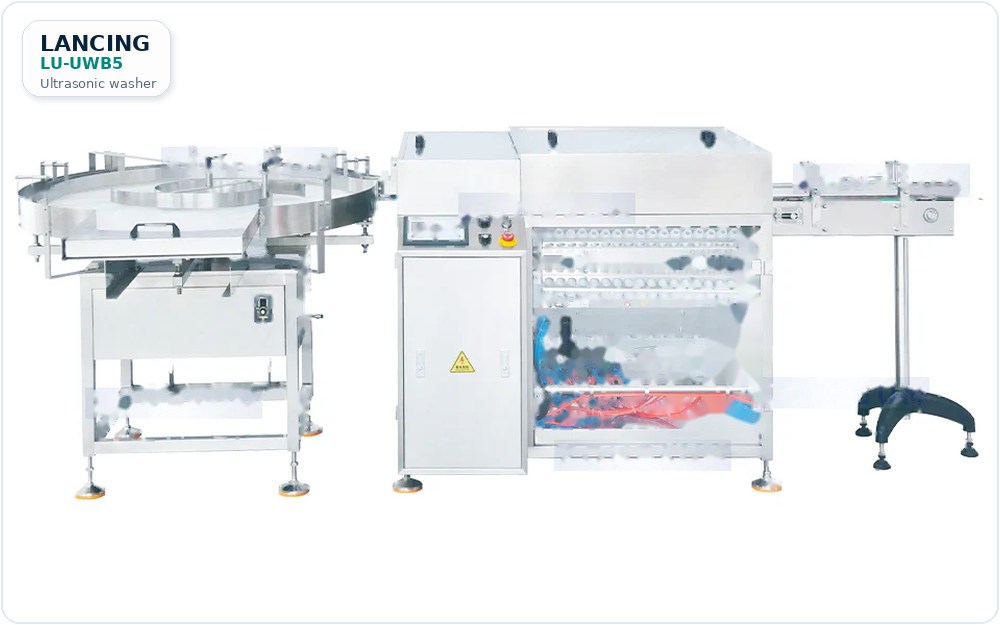 Service
Plan conveyors, transfer points, utilities and installation before ordering.
Explore route →Manufacturers with smaller batches, frequent format changes or limited space should consider semi-automatic rinsing before investing in a fully automatic line.
Normally yes, because the operator remains part of the process. The benefit is flexibility, lower complexity and easier format handling for modest output requirements.
Yes, many semi-automatic and rotary routes are suitable for glass bottles, subject to diameter, height, stability and loading checks.
Semi-automatic bottle rinsers are often attractive where batches are smaller, bottle formats change regularly or a new product is not ready for a fully automatic line. The engineering risk is usually not the rinse principle; it is whether the operator can load, present, drain and unload bottles consistently enough for the required output and cleanliness expectation.
For these projects, Lancing should see the real bottle family and understand the batch pattern. A single daily run of one bottle can be handled differently from multiple short runs with different neck finishes and diameters. Change parts, manual handling height, bottle inversion and access for cleaning should be agreed before the machine is specified.
| Check | How to validate it | Why it affects specification |
|---|---|---|
| Operator process | Time the real load, rinse, drain and unload sequence with sample bottles. | Shows whether the practical output is suitable for the batch size. |
| Bottle stability | Check whether bottles remain stable while inverted, held or presented to nozzles. | Prevents spill, damage or inconsistent rinsing. |
| Change parts | Identify rails, nests, holders or nozzle settings needed for each bottle family. | Controls future format-change cost and changeover time. |
| Rinse acceptance | Define whether the pass/fail check is visual, particle-based or moisture-based. | Keeps the trial aligned with what the production team actually needs. |