Service

Bottle rinser sample testing support.

Sample testing helps confirm whether the bottle can be handled reliably before a final route is selected.

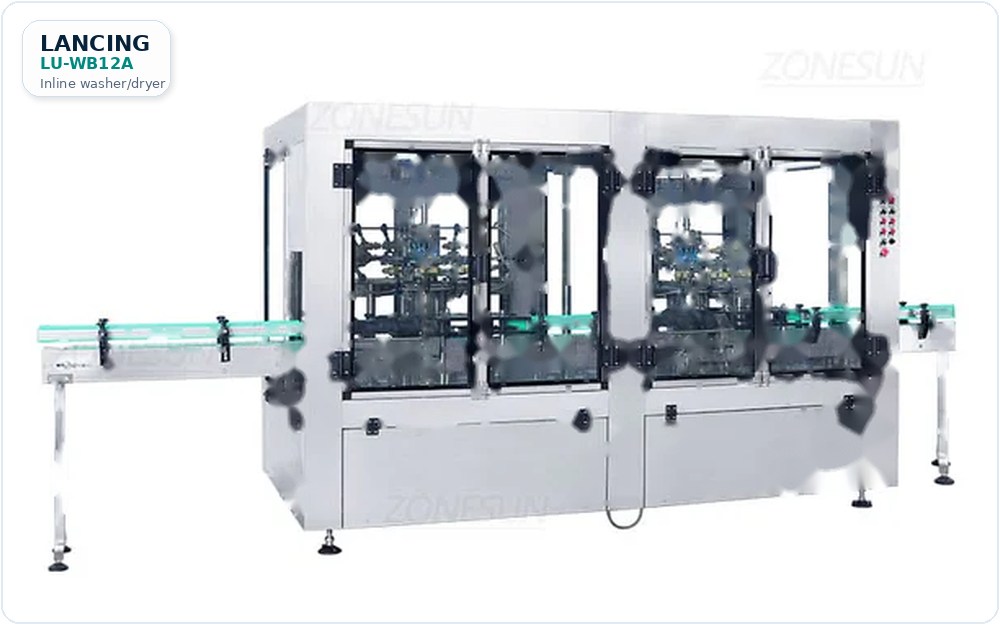
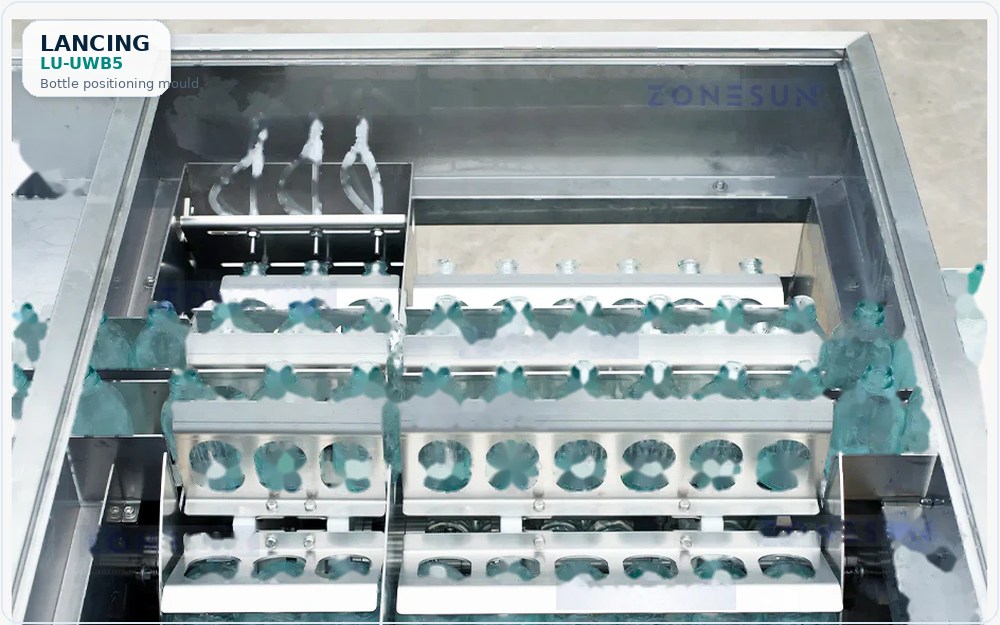
Bottle rinser sample testing support using Lancing LU bottle rinsing machinery imagery

Bottle handling review

Samples are checked for stability, neck access, base shape, wall strength and transfer risks.

Rinse route checks

Air or water coverage can be reviewed to decide whether the selected process is practical.

Changeover assessment

Where multiple containers are involved, samples help identify whether change parts or guide adjustments are required.

Quote confidence

Testing results can support a clearer equipment proposal and reduce assumptions in the quotation.
Related pages

Continue your bottle rinser shortlist.

FAQ

Common questions.

When should bottle rinser sample testing support be planned?

It should be considered before equipment is ordered so conveyor height, utilities, drainage, access and downstream line requirements are included in the specification.

Can support be provided for existing lines?

Yes, support can be based around existing conveyors, filling machines, cappers, labellers and available space, subject to a review of the site details.

What information is needed to start?

Photos of the production area, line layout, machine details, bottle samples, utility information and target output help build a practical project scope.

Sample testing

Use bottle samples to turn assumptions into evidence before the quote is finalised.

Sample testing is useful where bottle shape, static, particles, drainage or moisture tolerance could change the machine route. The test should record what was checked and what still needs confirmation at final specification.

CheckHow to validate itWhy it affects specification
Sample setSend enough bottles to represent the range, not only the easiest format.Prevents a machine being selected around one ideal sample.
Trial objectiveState whether the target is dust removal, water rinse, dry-off or handling proof.Keeps the test focused.
Result recordUse photos, notes or video where practical.Helps compare route options without claiming unsupported case evidence.
Decision-led trials

Build the sample test around the decision the trial must resolve.

A useful bottle rinser trial has a defined question. It may need to prove that a lightweight PET bottle can be presented without collapse, that ionised air improves removal of static-held dust, that water reaches a difficult internal surface, or that a rinsed bottle is dry enough at the labeller. Trying to answer every question with one informal demonstration usually produces weak evidence.

Representative samples should cover the difficult ends of the format range, not only the bottle that is easiest to run. Photos and drawings are useful for an initial review, but physical samples are normally required where grip, inversion, neck location, drainage or stability determine the route. The test record should state the setup and limitations so the result is not later treated as proof of a different speed, bottle or site condition.

Bottle rinser sample testing decisions and evidence
Decision to resolveSample testEvidence produced
Can the bottle be handled?Present, grip, invert or index the smallest, largest and least stable formats.Handling observations, required guides or holders and formats needing further work.
Will dry particles be removed?Compare controlled samples before and after filtered or ionised air under the same inspection method.Photos or notes showing the result and the effect of air path or ionisation.
Does water reach the target surface?Use the intended bottle orientation and nozzle position, then inspect the required internal or external area.Confirmed contact area, drain behaviour and any nozzle or dwell changes.
Is residual moisture acceptable?Inspect after the planned drain, drying and conveyor delay rather than immediately at the rinse point.Bottle condition at the process handover that matters to filling, coding or labelling.
Can the format range be changed over?Fit the planned settings or change parts and repeat the critical handling check.Change-part list, settings and any format outside the proposed scope.

A sample trial supports route selection; it does not replace the factory and site acceptance test for final output, connected controls and site utilities. Use the sample testing guide to prepare the bottles and the quote checklist to send the surrounding line information.

Sample-test boundaries

Questions that keep trial evidence useful at final specification.

Which bottle samples should be supplied?

Include the formats most likely to challenge handling or rinse performance: the smallest neck, widest body, tallest or shortest bottle, least stable base and any lightweight or unusual shape.

Can photos and drawings replace physical samples?

They can support an initial review, but physical samples are normally needed when grip, inversion, nozzle reach, drainage or bottle stability determines suitability.

What should be recorded during a sample trial?

Record the bottle identity, setup, rinse medium, nozzle or handling arrangement, test condition, inspection method, result and any limitation that still needs to be proved at FAT or SAT.

Evidence-led sample trial

Use a test matrix that separates contamination removal, bottle handling and downstream condition.

A trial should start with the incoming bottle condition and an agreed inspection method. It should then record the selected rinse settings, bottle stability, particle escape or water coverage, drain/dry behaviour and the condition at the downstream handover.

Trial question
Evidence to prepare
Detailed method
What is being removed?
Representative contamination and before-condition record
Where do released particles go?
Cabinet, extraction and surrounding-area observations
How is a pass identified?
Inspection method, sample count and accepted limit
What bottle condition reaches the next process?
Drain/dry result at the actual handover point
Can the result survive a line interruption?
Start, stop, utility-loss and restart observations
Buyer questions

Questions about traceable bottle-rinser sample testing.

A useful sample trial records what was tested, how it was tested and what the result does — and does not — prove.

Should a bottle-rinser trial use clean bottles or deliberately challenged bottles?

A strong trial normally needs known baseline bottles and representative bottles carrying the real contamination of concern. Artificially challenged samples should be used only when the challenge is agreed, controlled and relevant to the production risk.

The report must distinguish normal incoming contamination from a deliberate challenge so the result is not misrepresented as ordinary line performance.

How should sample identities be controlled during a trial?

Assign each sample or batch an identifier linked to bottle format, source, date, incoming condition and any deliberate challenge. Keep before-and-after photographs and do not mix formats or accepted and failed samples.

Traceable identities allow a result to be linked to a specific bottle and setting, which is essential when several formats or machine positions are being compared.

Which machine settings belong in the trial record?

Record the rinse medium, pressure or flow indicators available, nozzle or air position, timing, line speed, drain time, relevant air or water condition, tooling, format settings and the position tested. Also record any adjustment made during the trial.

Without settings, a successful sample cannot be repeated reliably at FAT, SAT or production start-up.

How should a failed sample be recorded?

Record the exact failure, sample identity, machine position, time, operating condition and whether the issue was contamination removal, bottle handling, damage, moisture or downstream transfer. Retain photographs or the physical sample where practical.

A failed sample is useful evidence when it identifies the limitation and the change required; it should not be hidden inside an overall pass statement.

What makes a trial report suitable for FAT or procurement review?

The report should state the scope, samples, method, settings, observations, results, pass/fail criteria, failures, limitations, actions and approval status. It should separate verified results from assumptions that still need site testing.

Use the trial-report guide to create a record that can be carried into the quotation, FAT and SAT plan.

Continue the specification: trial-report guide · FAT and SAT checklist

Make the sample trial repeatable and reviewable.

Send identified bottles, contamination evidence and the proposed acceptance method so the trial scope can be agreed before testing.

Plan sample testing
Coverage trial record

Separate nozzle coverage, contamination removal and line handling in the sample test.

A sample trial should not use one observation to answer three different questions. First, prove that the bottle is presented consistently and the nozzle reaches the intended internal or external area. Second, test whether the agreed contamination is removed under the selected air or water condition. Third, confirm that the bottle remains stable and reaches the downstream handover in the accepted condition.

Trial layerWhat to recordDecision
Presentation and coverageBottle, holder/gripper, nozzle, pressure/flow, dwell and observed reachWhether geometry or settings need to change
Removal resultKnown incoming condition, inspection method, sample identity and before/after findingWhether the rinse route addresses the stated contamination
Downstream conditionDrain/dry state, bottle stability, transfer, stops and restart samplesWhether the complete process is acceptable at the line handover

Use the nozzle coverage testing guide to define alignment and exposure. If a trial includes different neck finishes or support methods, use the gripper compatibility guide to select challenge samples.

Trial scope

Keep rinse, purge and post-change evidence as separate trial objectives.

If the project uses gas sparging after rinsing, record the cleaning result, residual moisture and gas-purge result separately. If the trial follows a new format, nozzle, utility or control change, link the samples and results to the change-control record.

Use the rinser-versus-sparger guide and the revalidation guide when writing the protocol.